
The Newest Weight Loss Drugs: What’s Next After Ozempic and Mounjaro?
Introduction
Over the past few years, drugs like Ozempic (semaglutide) and Mounjaro (tirzepatide) have transformed the weight loss and type 2 diabetes market. But pharmaceutical innovation hasn’t stopped there—a new wave of even more powerful medications is on the horizon, promising greater weight loss, improved blood sugar control, and more convenient dosing options.
In this article, we explore the newest weight loss drugs in development and recently launched, how they work, and what early clinical trials suggest.
1. Mounjaro (Tirzepatide)
– The Dual-Agonist Powerhouse
Originally developed for type 2 diabetes, Mounjaro targets two receptors:
GLP-1 (like Ozempic) – improves blood sugar control and appetite regulation.
GIP – another gut hormone that may boost fat loss and metabolic health.
Effectiveness:
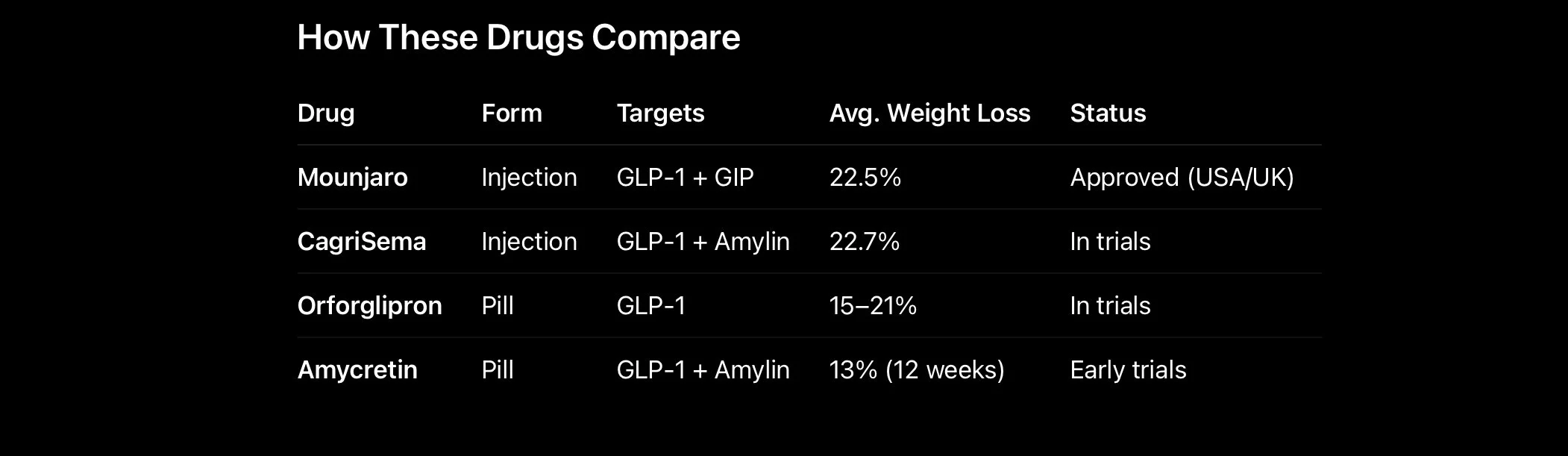
Average weight loss in trials: ~22.5% body weight over 72 weeks.
Outperforms Ozempic for both weight loss and glycaemic control.
2. CagriSema
– Next-Generation GLP-1 Combination
Developed by Novo Nordisk (makers of Ozempic/Wegovy), CagriSema combines:
Semaglutide (GLP-1 agonist)
Cagrilintide (amylin analogue)
Why it matters: Amylin analogues slow gastric emptying, reduce appetite, and improve satiety, potentially enhancing GLP-1 effects.
Clinical trial results:
~22.7% average weight loss.
May improve blood sugar and cholesterol more effectively than semaglutide alone.
3. Orforglipron
– The Once-Daily Pill Alternative
Eli Lilly’s Orforglipron could be a game-changer for those who prefer pills over injections.
Benefits:
Oral GLP-1 receptor agonist.
Similar weight loss to injectables in trials (~15–21%).
More convenient, especially for patients reluctant to start injections.
Expected market arrival: By 2026 (pending approval).
4. Amycretin
– Double the Early Weight Loss
Novo Nordisk’s experimental Amycretin combines GLP-1 and amylin effects in one oral pill.
Key results from early trials:
Up to 13% weight loss in just 12 weeks—double what Wegovy achieved in the same timeframe.
Could be a faster-acting alternative for patients seeking rapid results.
Still in early phases, but excitement in the medical community is growing.
Safety and Side Effects
While these medications can be highly effective, they’re not for everyone.
Common side effects:
• Nausea, vomiting, diarrhoea.
• Constipation or indigestion.
• Rare but serious: pancreatitis, gallbladder issues.
All require medical supervision, especially for people with existing digestive, gallbladder, or pancreatic conditions.
⸻
Who Might Benefit Most?
• People with obesity or overweight with related health issues (type 2 diabetes, hypertension).
• Those who have struggled to lose weight through diet and exercise alone.
• Patients who require better blood sugar control alongside weight management.
⸻
Poseidon Performance Take
While these new drugs are exciting, medication works best when paired with lifestyle changes. Strength training, protein-rich nutrition, and recovery strategies not only enhance results but help prevent rebound weight gain if treatment stops.
⸻
FAQs About the Newest Weight Loss Drugs
What’s the most effective new weight loss drug?
Current data suggests Mounjaro and CagriSema may offer the highest percentage weight loss in trials.
Are these drugs available on the NHS?
Mounjaro and Wegovy have limited NHS availability for certain BMI and health criteria. CagriSema, Orforglipron, and Amycretin are not yet approved.
Do I have to stay on them for life?
Most users regain some weight after stopping. Long-term use may be necessary for sustained results.
