
Coregasm: The Awkward Gym Myth Nobody Explains Properly
Every gym has its folklore.
Some of it is harmless — like which machine is “bad for your knees” or why everyone suddenly believes Bulgarian split squats are a personality trait. Other myths are whispered about more quietly, usually followed by nervous laughter and a quick look over the shoulder.
“Coregasm” sits firmly in that category.
It’s one of those terms people half-joke about online, exaggerate on social media, and never actually explain. Which is unfortunate, because while it is a real phenomenon, it has absolutely nothing to do with what most people think it does — and chasing it is a very good way to misunderstand both your body and your training.
So let’s clear it up.
Yes, coregasm exists.
No, your ab machine is not secretly designed to seduce you.
And no, it is not a sign you’re “doing core work properly”.



What People Are Actually Describing
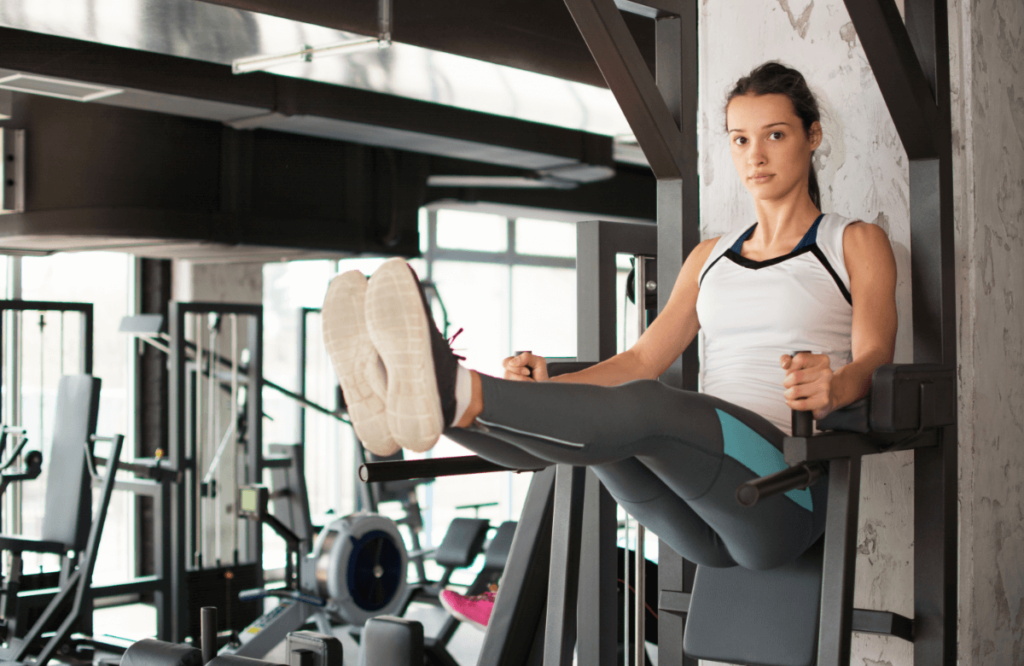
When people talk about a coregasm, they are usually describing an unexpected, orgasm-like sensation that occurs during certain exercises. Most commonly, this shows up during hanging leg raises, Roman chair work, captain’s chair knee raises, or fixed abdominal machines that encourage a lot of bracing and hip flexion.
Importantly, this experience is not driven by sexual arousal. There’s no fantasy, no intent, and no desire involved. In fact, most people who experience it are more confused than impressed. It tends to happen suddenly, without warning, and usually disappears just as quickly.
For the vast majority of gym-goers, it never happens at all.
The Physiology (Less Exciting, Far More Interesting)
Despite the name, a coregasm has far more to do with the nervous system than anything sexual.
Certain exercises demand strong contraction of the deep abdominal muscles while simultaneously increasing intra-abdominal pressure. When this happens alongside aggressive hip flexor use and breath-holding — which is very common on ab machines — the pelvic floor often contracts hard as well.
In some individuals, this combination creates enough neural stimulation through pelvic and pudendal nerve pathways that the sensation is interpreted by the brain as orgasm-like. Not because the body is “aroused”, but because the nervous system is receiving an unusually strong and poorly organised signal.
The brain doesn’t care why a signal is happening. It just labels it based on familiarity.
This is why the experience is inconsistent, unpredictable, and highly individual. It’s also why it’s completely absent in most people.
Why Ab Machines Get the Blame
Ab machines tend to take the heat for this because they encourage exactly the conditions that make it more likely: fixed positions, aggressive bracing, minimal breathing, and excessive hip flexor dominance.
When movement options are restricted and the goal becomes “pull harder”, people often compensate by gripping through everything. The trunk stiffens, the pelvic floor follows suit, and the nervous system lights up in ways it probably doesn’t need to.
The machine isn’t the cause. The strategy is.
This is also why the same person might only experience it on one specific piece of equipment, at one specific load, and never anywhere else.
Why Social Media Loves It (and Coaches Hate It)
Social media thrives on novelty, embarrassment and exaggeration. A rare neuromuscular response becomes a viral talking point, reframed as proof that a machine “really works your core” or that someone has unlocked a secret level of training.
In reality, experiencing a coregasm is not a marker of good core strength, effective programming, or superior pelvic control. If anything, repeated occurrences often suggest the opposite: too much tension, poor breathing mechanics, and a lack of control under load.
From a rehabilitation, performance, or longevity perspective, that’s not something to celebrate. It’s something to clean up.
What Usually Happens With Proper Coaching
Interestingly, when people are coached properly, this phenomenon tends to disappear.
Improving breathing patterns, reducing unnecessary bracing, adjusting load, or simply choosing a different movement is usually enough to calm the nervous system. As control improves, the body stops resorting to extremes to get the job done.
That’s not a coincidence. It’s how well-organised movement is supposed to feel: challenging, yes — but not confusing.
The Real Takeaway
Coregasm is real.
It is also wildly overblown, poorly explained, and completely irrelevant to good training.
Effective core work isn’t about chasing strange sensations or viral gym myths. It’s about building strength, control and confidence in a way that supports real life — not leaves you wondering what just happened on an ab machine.
At Poseidon, we’re far more interested in how the body adapts over time than how the internet reacts in the moment. If an exercise creates awkward stories instead of long-term progress, the solution isn’t hype or embarrassment.
It’s better coaching.
And that, thankfully, is much less awkward to talk about.
