
Emily: local physiotherapist specialising in neurological rehabilitation
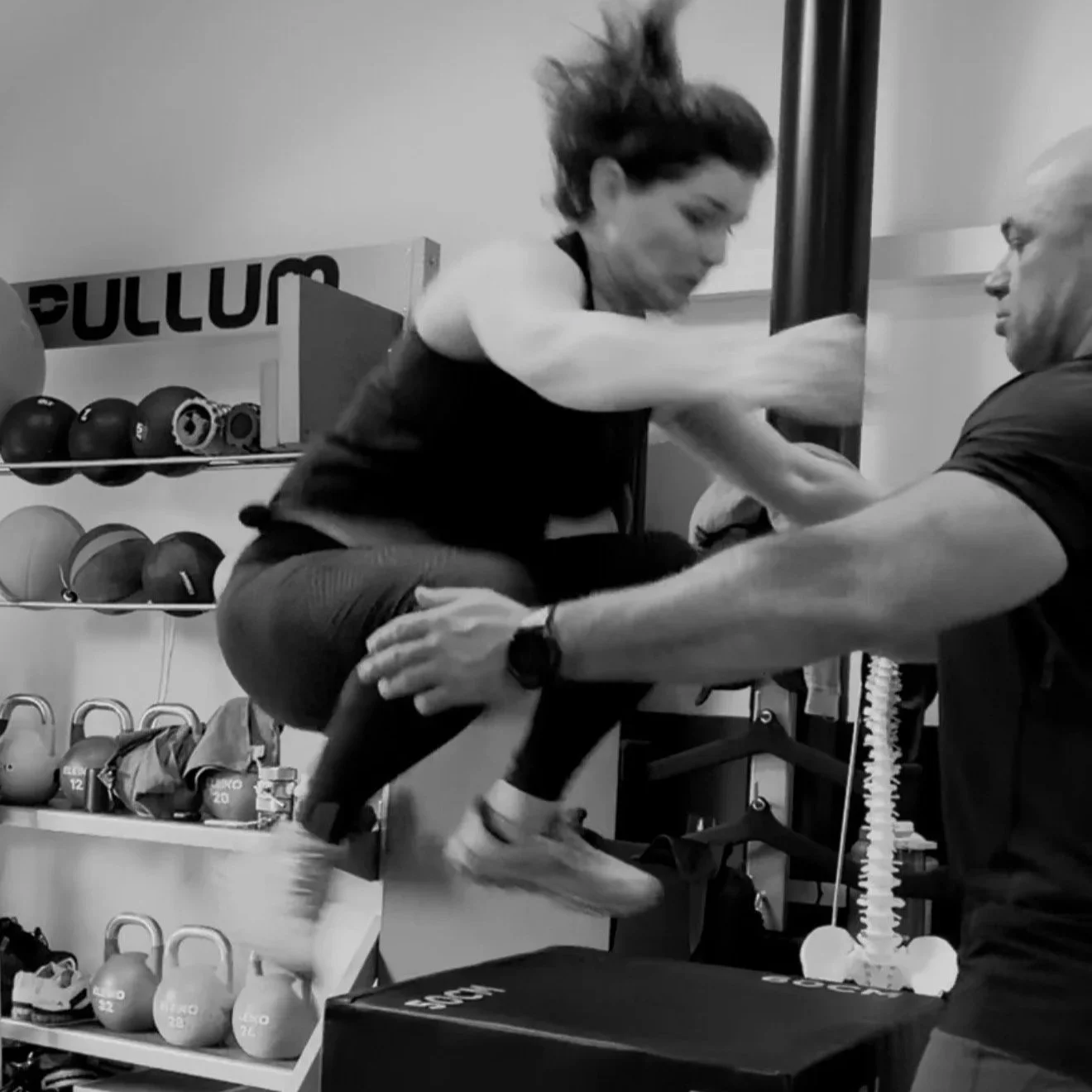
Emily, is a local physiotherapist specialising in neurological rehabilitation, working with individuals managing conditions such as Parkinson’s disease and other complex neurological disorders. Her professional life centres around helping people regain movement, rebuild confidence in their bodies and maintain independence despite physical challenges.
Like many clinicians who work in rehabilitation, Emily already had a strong appreciation for movement and physical health. She regularly practised Pilates, which provided a solid foundation of mobility, control and body awareness. At the same time, she was balancing the realities of everyday life - running a busy professional schedule while raising two young children.
Pilates provided many benefits, but Emily began to recognise that something important was missing from her overall training approach. Mobility and control are essential, but without progressive resistance training the body is not being challenged to build strength in the same way.
Strength training offers a different stimulus entirely. It provides measurable progress, gradual increases in load and the kind of adaptation that helps maintain muscle mass, joint resilience and long-term physical capability.
With that in mind, Emily decided to integrate structured strength training alongside her Pilates practice.
That decision brought her to Poseidon Performance.
Integrating Strength into an Active Life
Emily began training twice per week, fitting sessions around her work commitments and family life. From the outset the approach was simple and structured, focusing on the fundamental movement patterns that underpin effective strength training.
Rather than complicated exercises or high-intensity workouts, the sessions centred on the basics - movements that allow the body to develop strength safely and progressively.
These included:
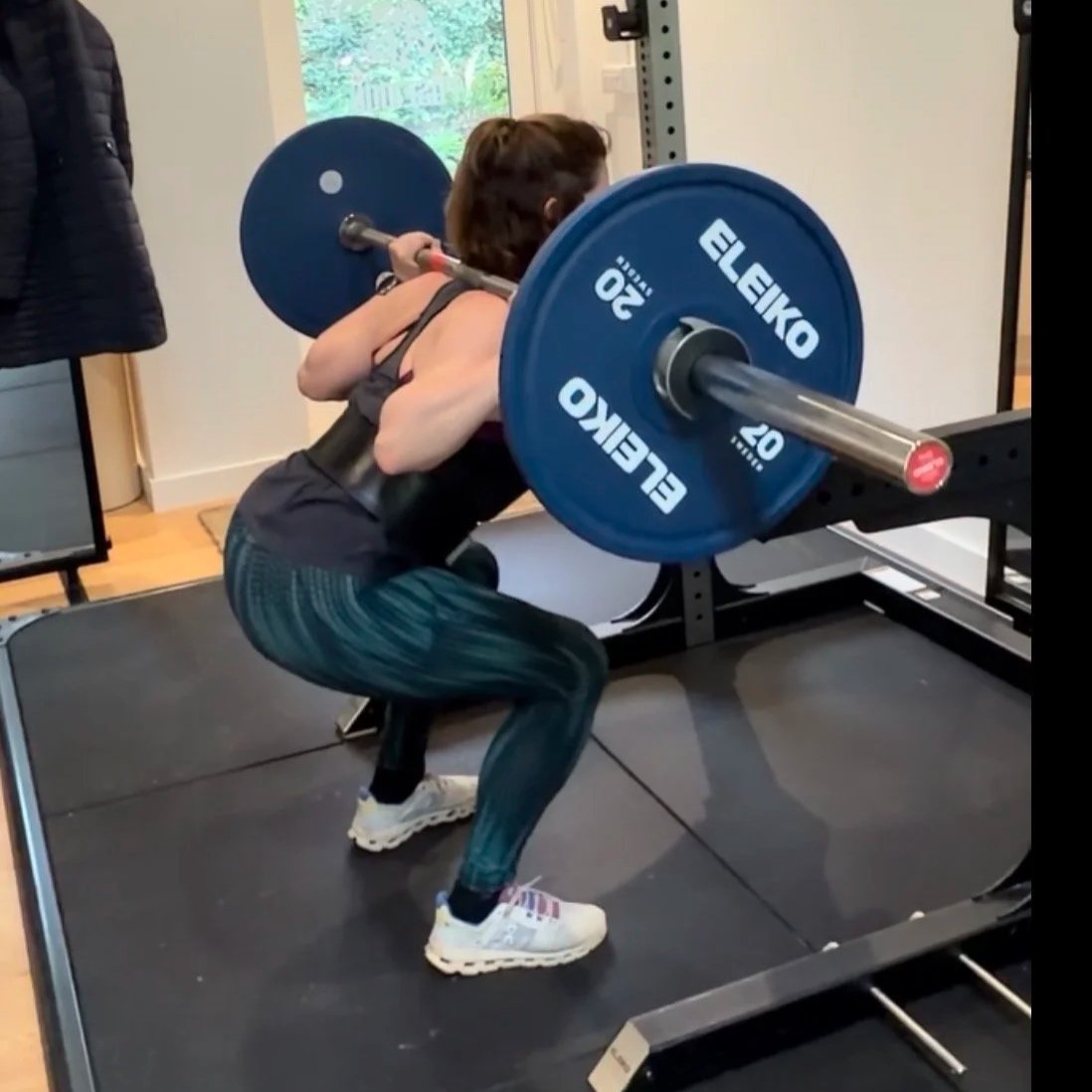
Squatting patterns to develop lower body strength
Hip hinge movements such as deadlifts
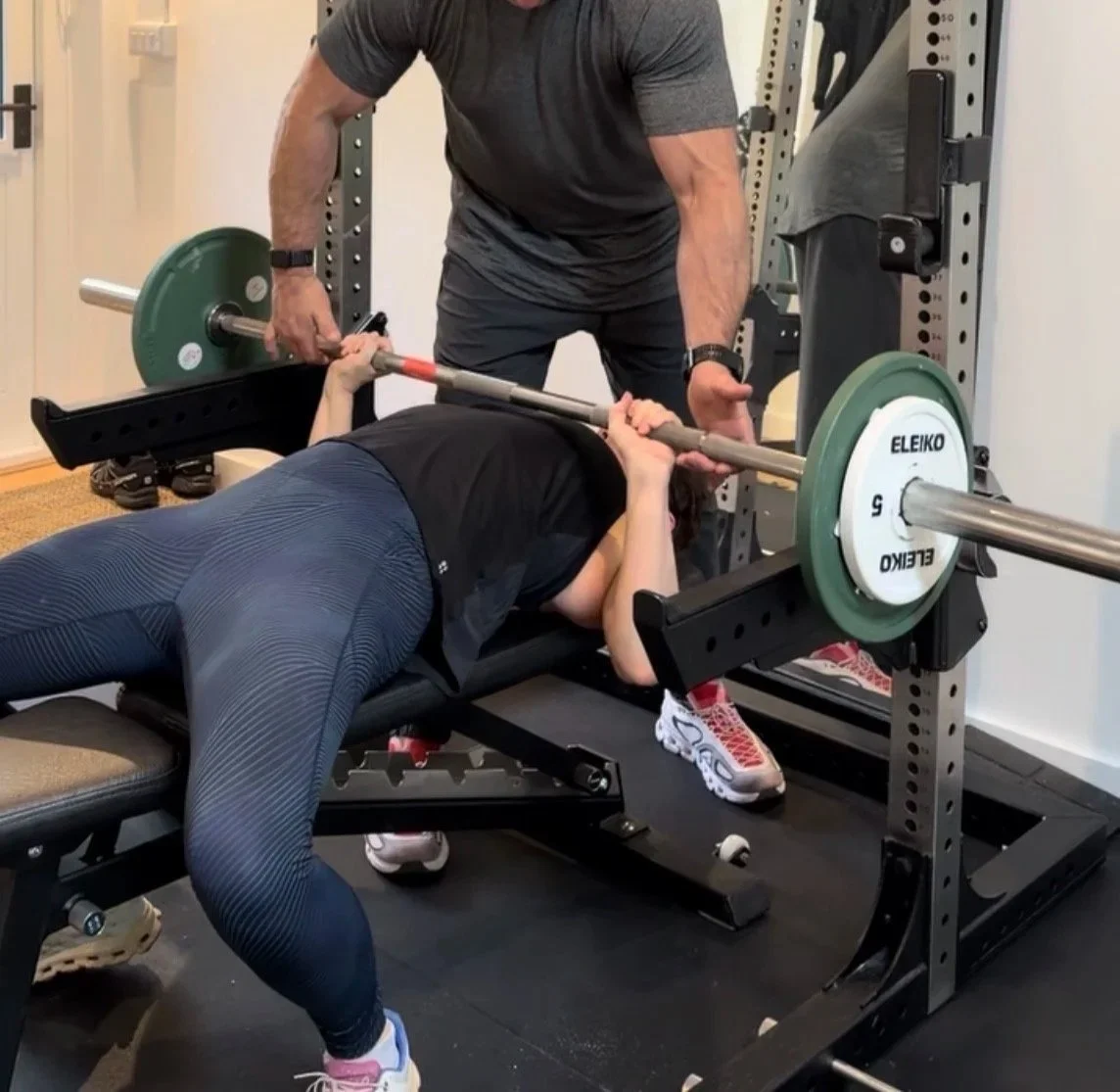
Upper body pushing and pressing movements
Pulling exercises to develop the back and shoulders
Core stability and controlled movement
Because Emily already had strong body awareness from Pilates, she adapted quickly to learning the lifting patterns. The focus then became gradual progression — increasing load over time while maintaining good movement quality.
The “Poseidon Bubble”
One of the interesting things about training at Poseidon is what members often jokingly refer to as the “Poseidon bubble.”
When you train in an environment where everyone is progressing and lifting well, impressive levels of strength can begin to feel surprisingly normal. People become accustomed to seeing others improve week after week, which can make individual progress feel less dramatic than it actually is.
Emily is a good example of this.
Within just three months of consistent training, she has developed significant strength across several key lifts.
She is now:
Deadlifting around 1.5 times her bodyweight
Squatting her bodyweight comfortably for repetitions
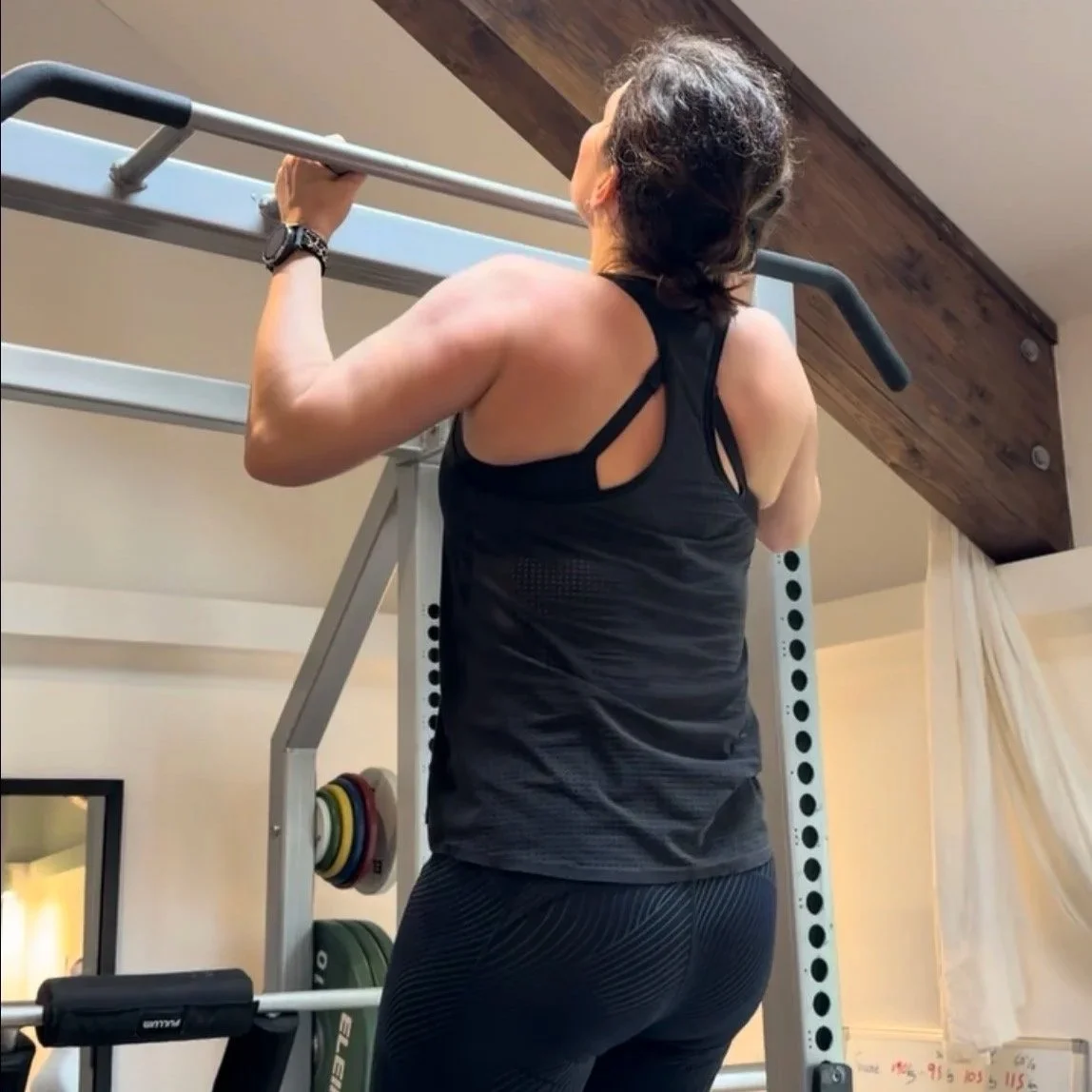
Performing pull-ups after only three months of training
For someone who only recently introduced strength training into her routine, these are impressive markers of strength. Yet within the Poseidon environment, surrounded by other motivated members progressing in their own training, Emily simply sees it as part of the process.
Strength and Confidence
Alongside the measurable improvements in strength, Emily has also noticed changes in her physique and overall confidence.
Strength training has begun to change the shape of her body, increasing muscle tone and improving body composition. More importantly, it has reinforced a sense of capability. Lifting heavier weights and achieving new milestones — such as her first pull-up — creates a tangible reminder of what the body is capable of achieving when trained consistently.
That confidence often carries over into other aspects of life. When someone realises they can deadlift more than they ever expected, it changes the way they think about physical challenges in general.
Strength as Part of the Bigger Picture
Emily’s journey highlights something that many active people eventually discover. Activities such as Pilates, yoga and running offer valuable benefits, particularly in terms of mobility, control and cardiovascular fitness. However, strength training provides a foundation that supports all of those activities.
By integrating structured resistance training into her routine, Emily has added a powerful component to her long-term physical health strategy.
What began as a decision to complement her Pilates practice has quickly turned into something more.
Three months into training, she is lifting significant weight, performing pull-ups and steadily becoming stronger with every session.
Somewhere along the way, Emily well and truly caught the strength training bug.
