
Same Body. Different Strategy. Why Strength Training Changes Everything



There is a persistent belief that body shape is mostly determined by diet.
Eat less, move more, and everything improves.
In reality, the strategy you choose determines whether your body becomes leaner, stronger, and more capable — or simply smaller, softer, and harder to maintain.
Two people can weigh the same, eat similar foods, and exercise regularly, yet look and feel completely different. The deciding factor is rarely effort.
It is method.
When Nothing Changes
If there is no structured training and no real nutritional awareness, the body follows a predictable path.
Muscle mass slowly declines, metabolism gradually slows, and fat tends to accumulate around the midsection first. Energy levels drop, recovery worsens, and each year it becomes slightly harder to change.
This isn’t a failure of willpower. It is simple physiology.
Without stimulus, the body has no reason to maintain expensive tissue such as muscle.
The “Diet Only” Trap
Dieting without resistance training often produces quick scale weight changes, but not the kind most people actually want.
When calories are reduced without a strength stimulus, the body loses both fat and muscle. The result is a smaller version of the same shape — often described as “skinny-fat”.
Metabolism slows because muscle mass has decreased. Weight regain becomes easier after the diet ends, and future fat loss becomes progressively harder.
This is why many people feel stuck in cycles of losing and regaining weight despite consistent effort.
Training Without Structure
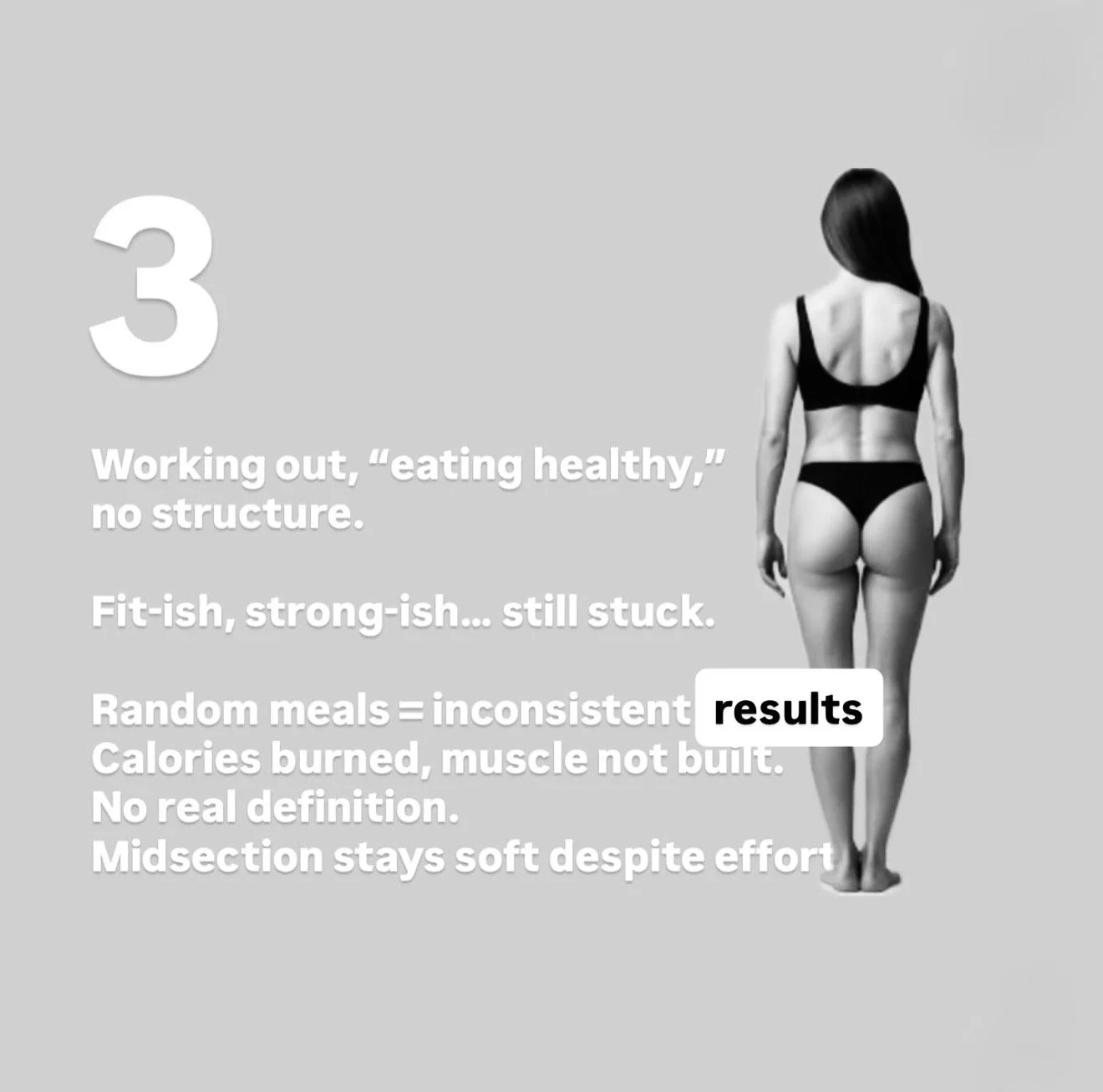
Many people sit somewhere in the middle. They attend classes, walk regularly, or “eat quite well”, but without a clear progression or plan.
They become fitter, perhaps slightly stronger, yet body composition barely shifts. Calories are burned, but muscle is not meaningfully built. The midsection remains soft despite consistent activity.
Effort is present. Direction is not.
What Actually Changes Body Shape
Body composition improves when two things happen together:
The body receives a progressive strength stimulus
Nutrition supports muscle retention and fat loss
Strength training signals the body to maintain and build muscle tissue. Adequate protein and sensible energy intake allow fat to be reduced without sacrificing that muscle.
Over time this produces the changes most people are actually seeking:
Higher resting metabolism
Firmer, more defined shape
Improved posture and movement
Better long-term weight stability
This is not a quick fix. It is a structural change.
Why Muscle Changes Everything
Muscle is metabolically active tissue. The more of it you retain, the easier it becomes to regulate body fat, blood sugar, and energy levels.
Strength training also improves insulin sensitivity, meaning nutrients are handled more efficiently. Rather than being stored as fat, more energy is directed toward recovery and performance.
This is one reason sustainable fat loss becomes easier — not harder — once strength training is established.
The Role of Intelligent Nutrition
“Macros” and calorie targets are often presented in an extreme or obsessive way online. In reality, effective nutrition for body composition is surprisingly simple.
It focuses on:
Adequate protein
Consistent meal structure
Appropriate energy intake
Sustainability within real life
The goal is not restriction. It is supporting the training stimulus.
Why Results Last With the Right Strategy
When strength and nutrition are aligned, the body becomes more resilient.
Metabolism remains higher, muscle is preserved, and fat regain is less likely even during busy periods. This is why structured strength training produces results that last beyond short phases of motivation.
The objective is not to maintain a peak condition indefinitely. It is to create a baseline that is easier to live with.
What This Means for Women in Dartmouth
For many women in Dartmouth and the South Hams, the priority is not extreme transformation. It is feeling comfortable, capable, and confident in their body without constant dieting.
A structured approach to strength training allows:
Sustainable body composition improvements
Reduced reliance on restrictive diets
Improved posture, confidence, and energy
Long-term health alongside aesthetic change
This is not about chasing a physique trend.
It is about building a body that is easier to live in.
Key Takeaways
Dieting alone often leads to muscle loss and a slower metabolism
Random training burns calories but rarely changes body composition
Progressive strength training preserves and builds metabolically active tissue
Nutrition should support training, not fight against it
Sustainable results come from structure, not intensity
Final Thought
Results are rarely about effort alone.
More often, they are the product of a clear, intelligent strategy applied consistently over time.
Same body.
Different method.
Very different outcome.
