
Essential Guide to Testosterone Replacement Therapy (TRT) Dosing
A practical educational overview
Testosterone Replacement Therapy (TRT) has become increasingly common among men with clinically low testosterone levels. Yet despite the growing interest, dosing strategies are often poorly understood. Many people assume TRT simply means “taking testosterone,” but the reality is more nuanced. Dose, frequency, delivery method, and individual response all influence outcomes.
This guide explains the fundamentals of TRT dosing from an educational perspective — focusing on physiology, common protocols, and the principles that underpin responsible use.
What TRT Is Actually Designed to Do
TRT is intended to restore physiological testosterone levels in men with clinically confirmed hypogonadism. The goal is not supraphysiological enhancement, but rather to bring hormone levels back into a normal healthy range.
Typical reference ranges vary slightly by lab, but total testosterone levels in adult males are generally considered normal within:
300–1000 ng/dL (10–35 nmol/L)
Symptoms that may accompany low testosterone include:
Fatigue
Low libido
Reduced muscle mass
Increased body fat
Depressed mood
Reduced bone density
TRT aims to correct these symptoms by restoring normal hormonal signalling.
Understanding TRT Dosing
TRT dosing is not a one-size-fits-all protocol. It depends on:
Body weight
Metabolic rate
SHBG levels
Age
Delivery method
Individual response
However, most medical TRT protocols fall within a predictable range.
Typical Weekly Testosterone Doses
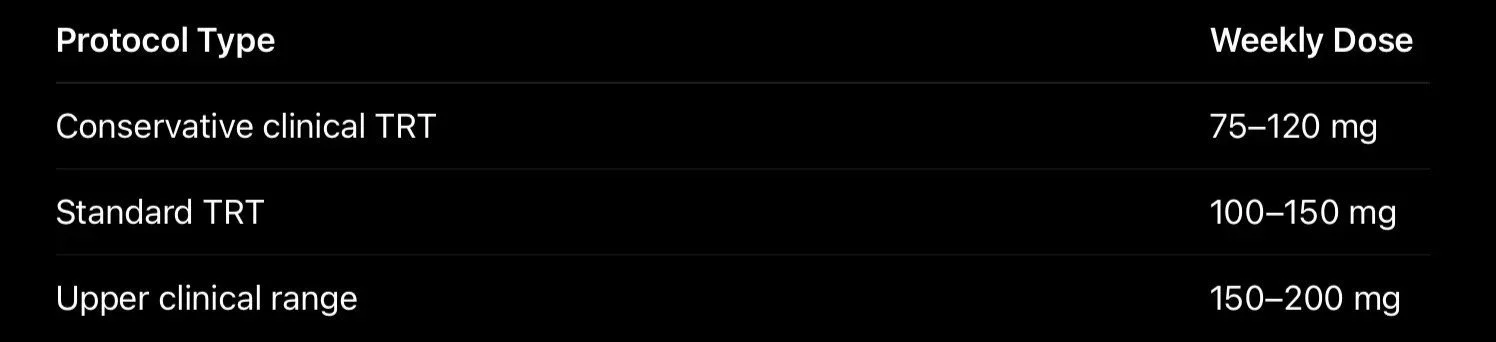
Higher frequency dosing can reduce:
Hormonal fluctuations
Oestrogen spikes
Mood instability
Fluid retention
This is one reason many experienced clinicians favour split dosing protocols.
Different TRT Delivery Methods
Intramuscular Injections
This is the most common TRT method.
Common esters include:
Testosterone Cypionate
Testosterone Enanthate
Testosterone Undecanoate
These are long-acting esters that release testosterone gradually after injection.
Advantages:
Reliable absorption
Flexible dosing schedules
Typically the most cost-effective option
Transdermal Gels or Creams
Subcutaneous injections (into body fat rather than muscle) have become more popular in recent years.
Advantages:
Smaller needles
Less injection discomfort
Can allow more frequent dosing schedules
Many patients report stable levels with 20–30 mg injections every other day.
Monitoring Blood Work
TRT should always be monitored with blood tests. Key markers include:
Hormonal markers
Total testosterone
Free testosterone
SHBG
Oestradiol (E2)
Health markers
Haematocrit / haemoglobin
Lipids
Liver enzymes
PSA (for older men)
Blood tests are usually checked:
Before therapy
6–8 weeks after starting
Every 3–6 months thereafter
This helps ensure testosterone levels remain within a healthy physiological range.
The Most Common TRT Dosing Mistakes
1. Starting Too High
Many new patients begin at doses closer to performance-enhancement levels.
A better approach is often:
Start low and titrate upward based on bloodwork and symptoms.
2. Ignoring Injection Frequency
Large weekly injections can create hormonal swings.
Splitting doses often produces:
More stable mood
Better energy
Fewer side effects
3. Treating Numbers Instead of Symptoms
Optimal TRT balances blood markers and subjective wellbeing. A slightly lower level with excellent symptom resolution is often preferable to chasing higher numbers.
4. Ignoring Lifestyle
TRT cannot compensate for:
Chronic sleep deprivation
Poor diet
Lack of resistance training
Strength training, adequate protein intake, and proper sleep remain fundamental to maintaining muscle mass, bone density, and metabolic health.
TRT vs Performance Enhancement
A critical distinction must be made between:
TRT (replacement therapy)
Restoring normal physiological testosterone levels.
Supraphysiological dosing
Used in bodybuilding or performance-enhancement contexts.
Once weekly doses exceed roughly 200 mg, blood levels typically exceed the natural range and move into enhancement territory rather than medical replacement.
Final Thoughts
When used appropriately and monitored properly, TRT can significantly improve quality of life for men with clinically low testosterone. However, responsible therapy requires more than simply prescribing a hormone.
Effective TRT management includes:
Individualised dosing
Appropriate injection frequency
Regular blood monitoring
Attention to lifestyle factors
For men considering TRT, the goal should always be restoring health and function — not simply chasing higher numbers on a blood test.
Need Help Interpreting Bloodwork or Hormone Strategies?
Many people researching TRT are overwhelmed by conflicting advice online.
At Poseidon Performance we offer a Performance & Recovery Strategy Review designed to help individuals understand their training, recovery, and health markers from an educational perspective.
This includes reviewing:
• Bloodwork markers
• Training load
• Recovery strategies
• Hormonal considerations
You can learn more here:
Performance & Recovery Strategy Review
https://www.poseidonperformance.com/performance-recovery-strategy-review-educational
